In luxury interiors, every detail communicates intention.
Yet one of the most overlooked elements in high-end homes is symbolic art placement.
Feng Shui art is not decorative nostalgia.
It is spatial strategy.
When chosen correctly, it reinforces:
Stability
Authority
Flow of opportunity
Emotional balance
When chosen incorrectly, it becomes visual noise.
This guide explains how discerning homeowners can select Feng Shui art with purpose and precision.
1. What Is Feng Shui Art for Luxury Homes?
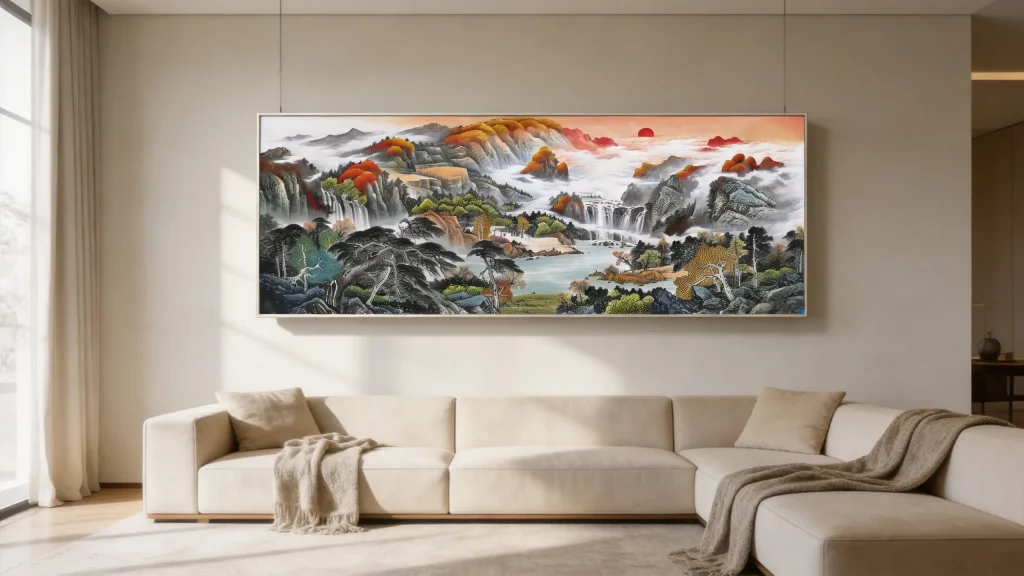
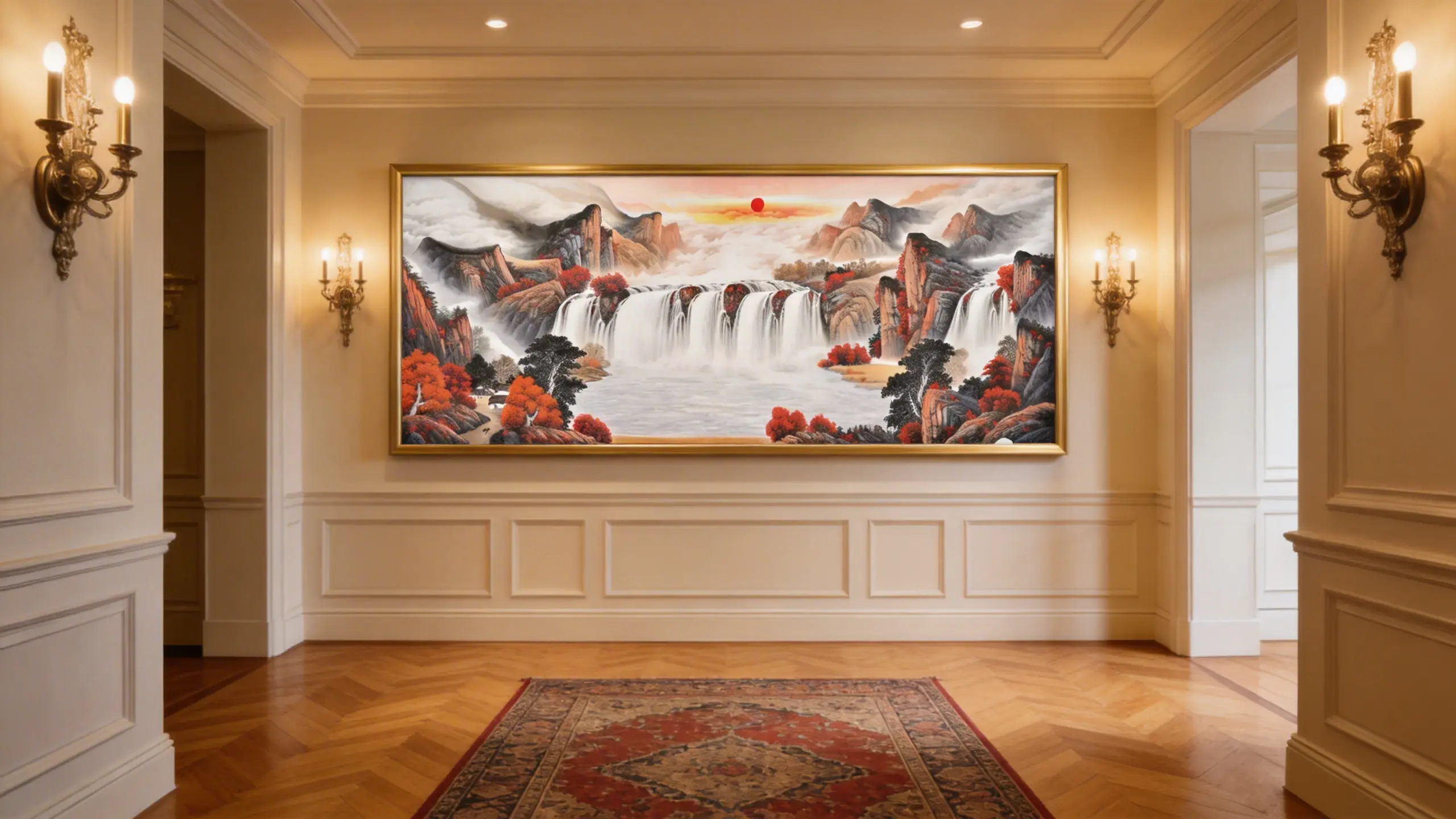
In classical Chinese landscape traditions refined during the Song Dynasty, mountains and water were never painted randomly.
They represented:
- Mountain (Shan) → Support, authority, protection
- Water (Shui) → Wealth flow, movement, expansion
- Mist → Transition, opportunity
In Feng Shui, these elements become energetic anchors inside architecture.
Before selecting a painting, ask:
What function should this room serve?
2. Placement by Room Function
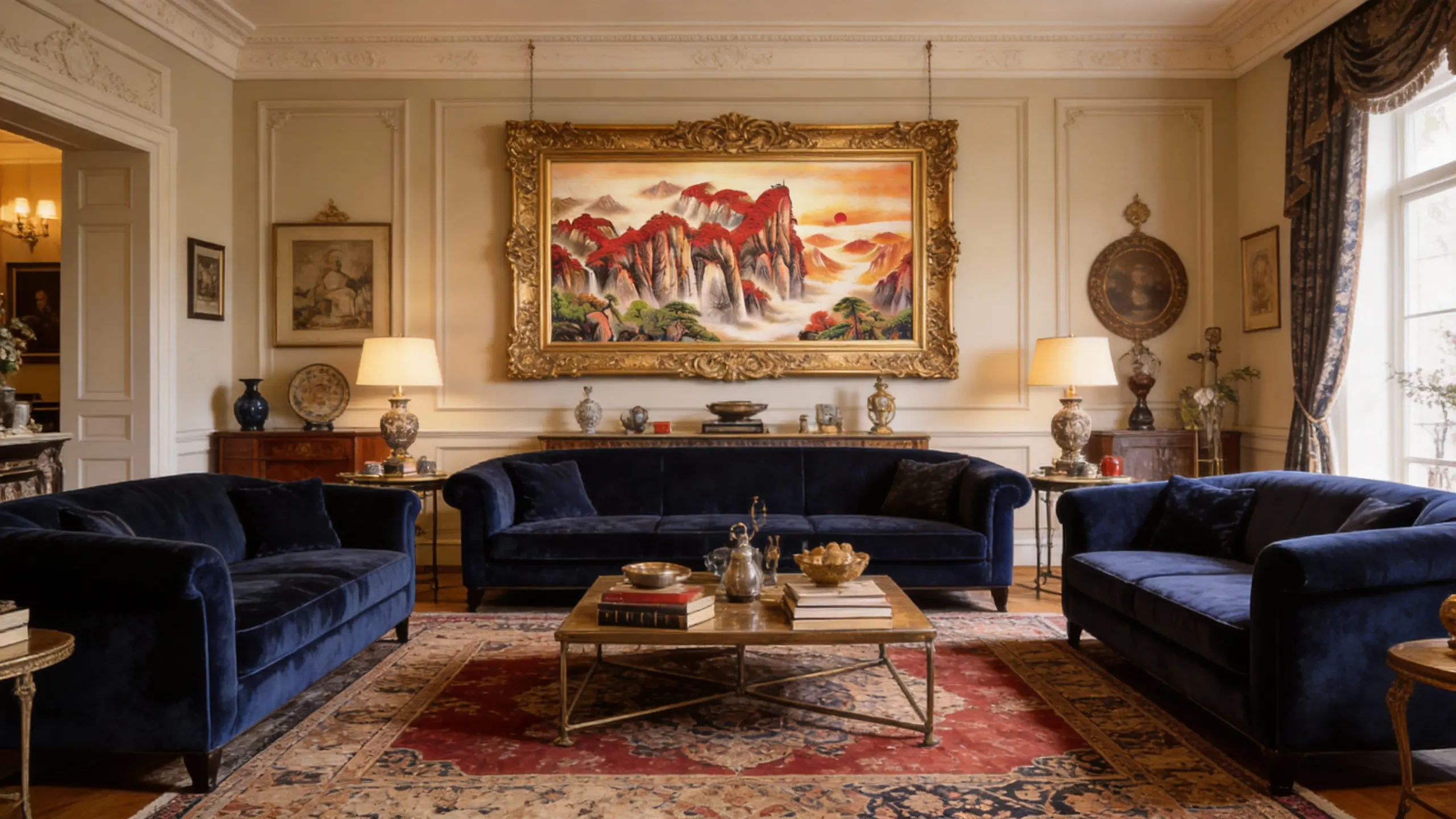
Living Room – Stability & Family Harmony
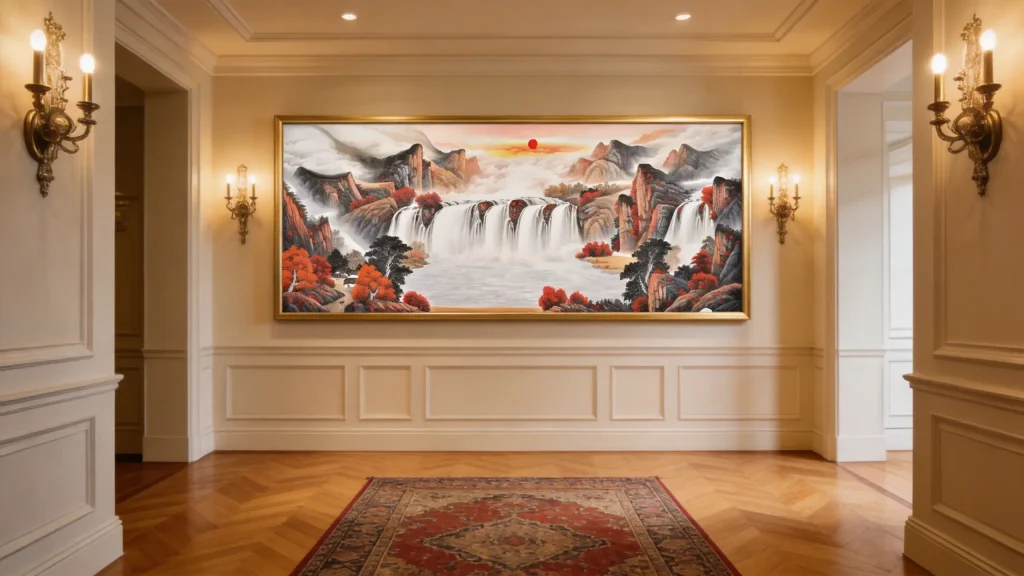
Choose mountain-dominant compositions.
Avoid:
- Chaotic abstract forms
- Violent imagery
- Excessive downward water flow
The living room represents collective energy.
It should feel grounded, not restless.
Executive Office – Authority & Decision Power
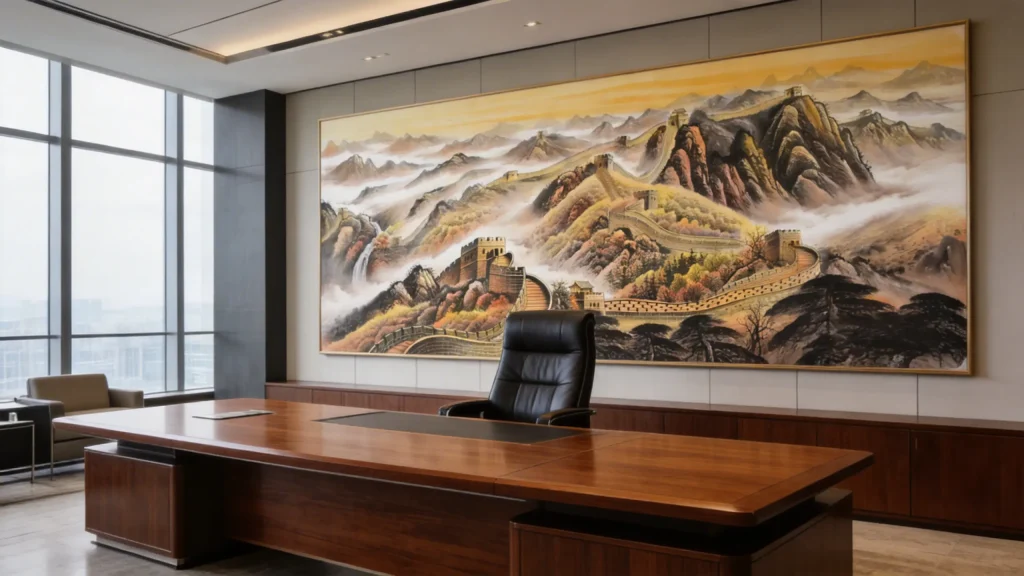
For entrepreneurs or leaders:
Avoid placing strong water imagery directly behind seating — it weakens authority.
Entryway – Energy Introduction
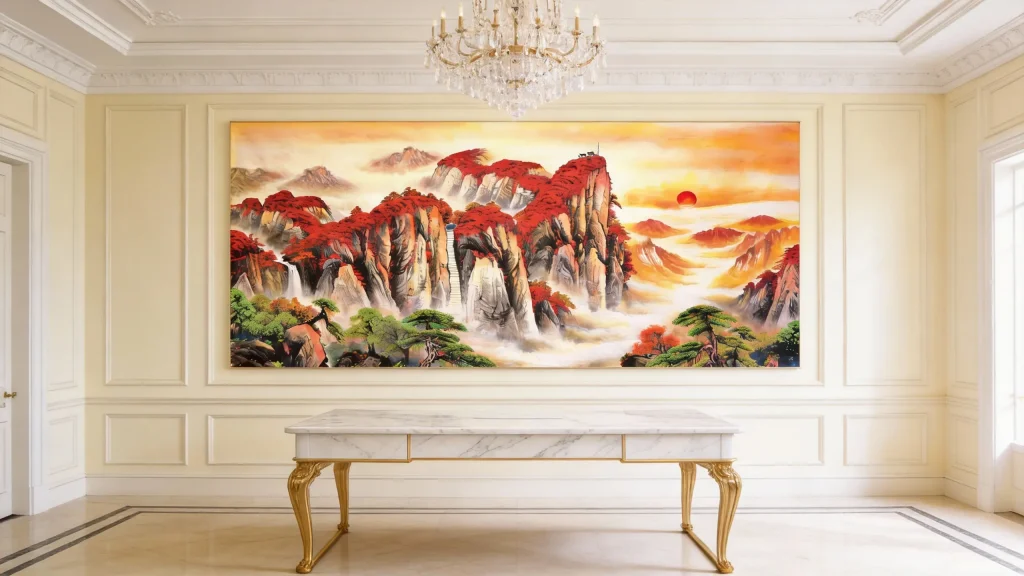
This is where opportunity enters.
Use art that suggests:
- Gentle movement
- Open landscapes
- Forward direction
3. Hand-Painted vs Mass Production
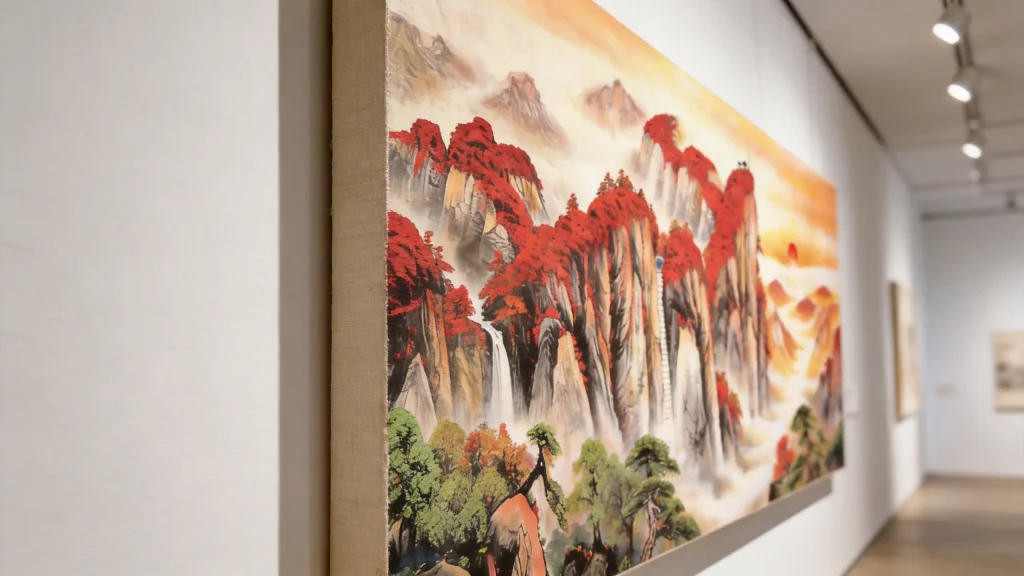
Luxury homeowners understand craftsmanship.
Printed décor offers aesthetic repetition.
Hand-painted art offers intention.
Each brushstroke carries:
- Directional composition
- Element balance
- Cultural lineage
In Feng Shui, intention amplifies placement.
4. Color Psychology in Feng Shui Art
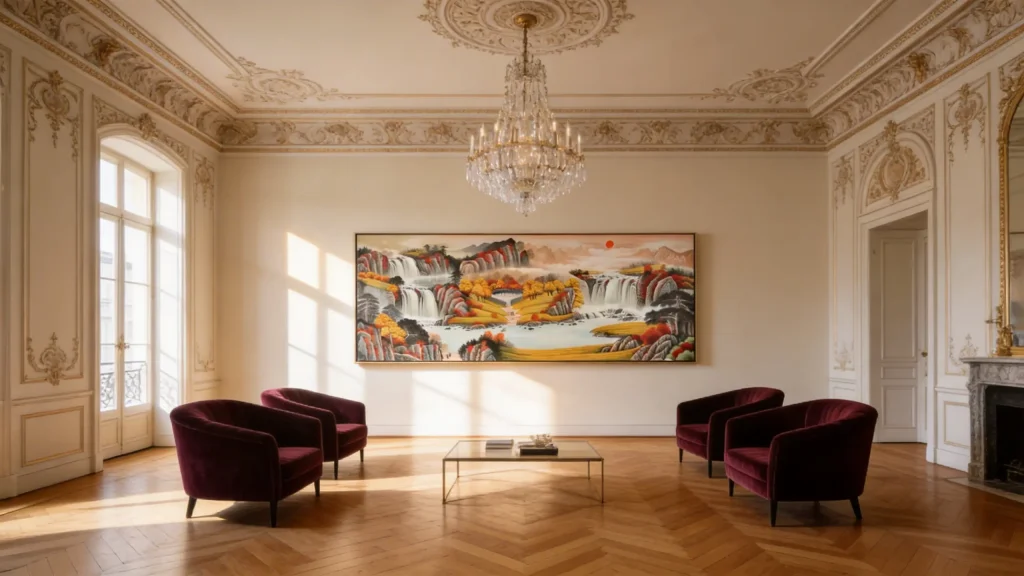
- Gold accents → Authority & influence
- Deep ink mountains → Stability & legacy
- Blue water → Wealth circulation
- Warm neutral backgrounds → Emotional comfort
Luxury interiors benefit from subtle symbolic layering — not visual excess.
Feng Shui art is not superstition.
It is architectural psychology supported by centuries of cultural refinement.
When thoughtfully selected, it becomes:
- A wealth anchor
- A leadership enhancer
- A legacy statement
Strategic art placement transforms space into silent support.